

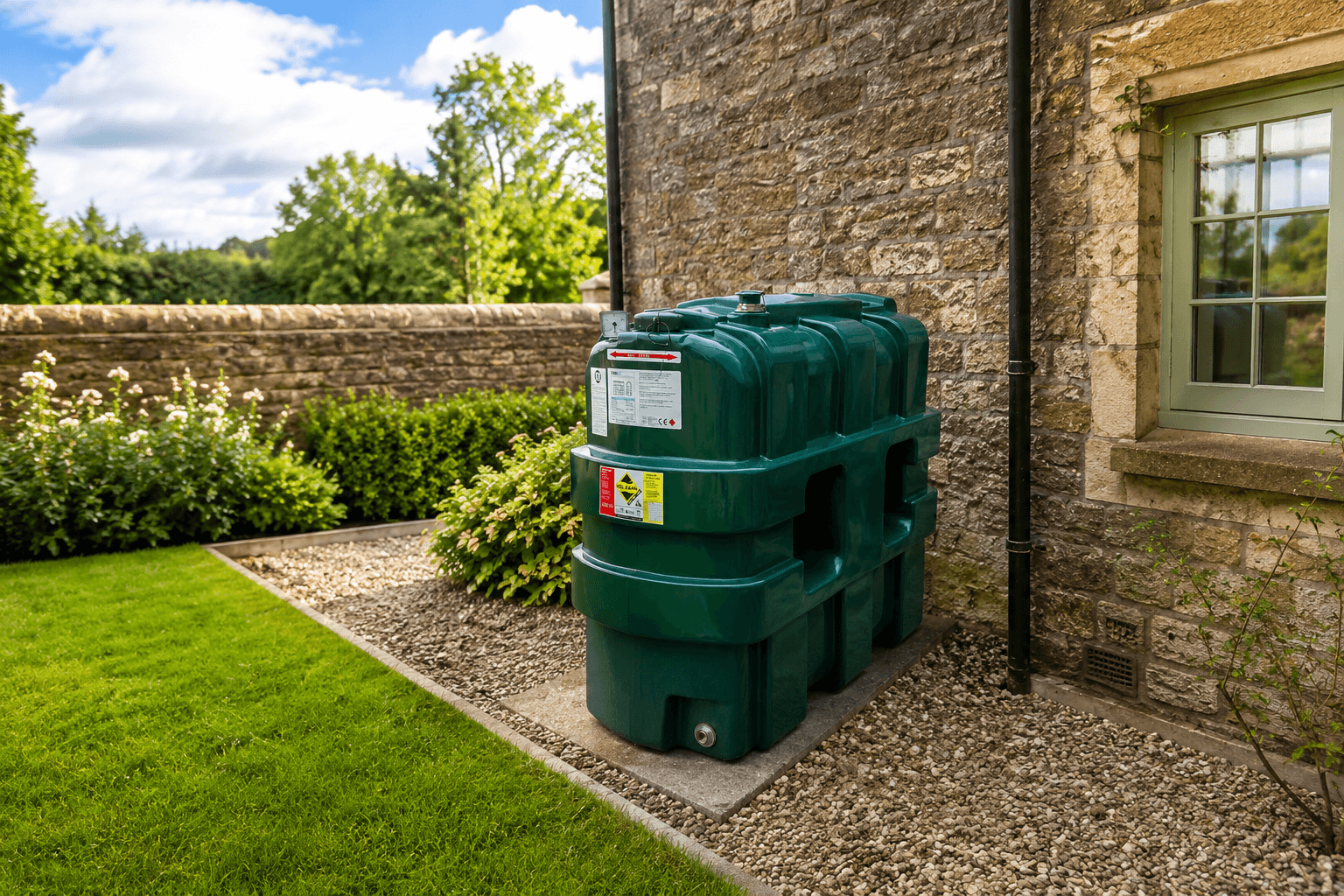
Summer Oil Tank Maintenance: How to Keep the Area Around Your Heating Oil Tank Safe, Clear and Accessible
For many UK homes, especially rural and off-grid properties, a domestic oil tank is one of the most important parts of the heating system. It stores the fuel your boiler relies on through autumn, winter and the colder months, so keeping the tank and the surrounding area in good condition should never be treated as an afterthought.
Summer is one of the best times to carry out simple oil tank maintenance. The weather is usually drier, access is easier, and problems are often easier to spot before heavy rain, frost, falling leaves and winter fuel demand return. A clear, tidy and well-maintained oil tank area can help improve safety, make deliveries easier, reduce the risk of avoidable damage and support the long-term condition of your heating oil system.
In this guide, we’ll look at practical summer checks every homeowner should consider, including vegetation clearance, base inspections, pipework checks, access routes, security and safe screening. We’ll also explain why regular maintenance matters and when it may be time to speak to a professional.
Why Summer Is the Best Time to Check Your Oil Tank Area
Summer gives homeowners a good opportunity to inspect the area around their heating oil tank without the added challenges of bad weather. During winter, the ground may be muddy, slippery or frozen, making it harder to get a clear look at the tank base, pipework and surrounding space.
By checking your domestic oil tank in summer, you can often spot small issues before they become more serious. Overgrown plants can be trimmed back, debris can be cleared, fencing can be repaired and access routes can be improved before you need regular heating oil deliveries again.
This is especially useful if your tank is positioned at the side of the house, behind a garage, near a boundary, or in a part of the garden that is not checked very often. Many oil tank problems start small, but they can become expensive or disruptive if they are ignored for too long.
Keep Vegetation Away From the Oil Tank
One of the simplest but most important summer maintenance jobs is clearing vegetation around the tank. Grass, weeds, shrubs and climbing plants can quickly grow around a domestic oil tank during warmer months, especially if the tank is placed in a quiet corner of the garden.
Overgrown vegetation can cause several problems. It can make the tank harder to inspect, hide signs of leaks or cracks, restrict access for heating oil deliveries and trap moisture around the tank or base. In some cases, plant roots may also interfere with the ground around the tank base over time.
Cut back long grass, remove weeds and trim any shrubs that are starting to grow too close. The goal is not to leave the area bare or unattractive, but to keep enough clear space so the tank can be inspected safely and accessed easily.
If you want to make the tank less visible, avoid planting too close to it. Instead, use safe landscaping ideas that maintain access, airflow and inspection space. This guide from Oil Tank Supermarket on ways to hide your oil tank without compromising safety gives useful ideas for screening a tank while keeping practicality in mind.
Remove Clutter and Keep Access Routes Clear
It is common for garden items to slowly build up around an oil tank, especially during summer. Plant pots, tools, timber, hoses, bins, children’s toys and unused outdoor furniture can all end up near the tank without much thought.
This can create unnecessary hazards. Clutter can block inspection points, make the area harder to reach, create trip risks and make fuel deliveries more awkward. A delivery driver may need clear access to fill points, vent pipes and the tank area, so it is worth keeping the route tidy throughout the year.
Walk the route from the nearest access point to the oil tank. Ask yourself whether someone could safely reach the tank in wet or low-light conditions. If the answer is no, clear the path and remove anything that could cause an obstruction.
A tidy tank area also makes it easier to notice if something changes. For example, if the ground begins to sink, water starts pooling, or there are signs of pest activity, you are more likely to spot the issue early when the space is clean and visible.
Check the Oil Tank Base
The tank base is one of the most important parts of the installation. Your oil tank should sit on a stable, level and suitable base that supports the full weight of the tank when filled. A full heating oil tank can be extremely heavy, so any movement, cracking or sinking around the base should be taken seriously.
During summer, check whether the base looks level and secure. Look for cracks, signs of movement, erosion, soft ground, gaps under the tank, or areas where water may be collecting. If the tank appears to be leaning, unsupported or unstable, do not ignore it.
You should also avoid placing heavy items near or against the tank. Even if the tank looks strong, unnecessary pressure or impact can increase the risk of damage over time.
If you are unsure whether your oil tank base is still suitable, it is best to get advice from a qualified oil tank professional rather than guessing.
Inspect Visible Pipework and Fittings
The visible pipework, fittings and connections around your heating oil tank should also be checked regularly. You do not need to dismantle anything or carry out technical work yourself, but a visual inspection can help you spot obvious warning signs.
Look for signs of corrosion, damage, staining, damp patches, loose fittings, crushed pipework or anything that looks different from normal. Pay attention to areas where pipes enter the ground or connect to the tank, as these can be easy to overlook.
You should also check that pipework is not blocked by plants, covered by soil, hidden under garden materials or exposed to avoidable impact. If you notice a strong smell of oil, visible staining, a sudden drop in oil level or anything that looks like a leak, seek professional help quickly.
GOV.UK advises that oil spills should not be cleaned up by homeowners themselves and recommends getting help from relevant organisations such as your insurer, the Environment Agency or your oil supply company if there is a leak or spill. You can read the official guidance on storing oil at your home or business.
Watch for Standing Water and Drainage Problems
Standing water around an oil tank should not be ignored. Pooled water can soften the surrounding ground, contribute to erosion and make the tank area harder to access safely. It can also hide signs of base movement or make routine checks more difficult.
After heavy rain, take a look at the area around the tank. If water regularly collects near the base, it may be worth improving drainage or speaking to a professional for advice. Do not dig around the tank or alter the ground in a way that could affect the base or pipework without proper guidance.
A good oil tank area should be easy to reach, easy to inspect and free from avoidable hazards. If water is consistently pooling nearby, that is a sign the surrounding area may need attention.
Look for Pest Activity
Pests can sometimes cause problems around domestic oil tanks, especially if the tank is located near hedges, outbuildings or cluttered garden areas. Rodents may disturb insulation, burrow near the base or damage nearby materials. Insects and nesting animals can also make access more difficult.
Check for burrows, droppings, nesting material or disturbed ground. Keeping the area clear of clutter and long vegetation can reduce the chances of pests settling close to the tank.
If you suspect pest damage near pipework or the tank base, arrange a professional inspection before the issue becomes more serious.
Maintain Fencing, Screening and Security
Some homeowners use fencing, trellis, timber screening or planting to make their oil tank less visible in the garden. This can be done well, but it must not compromise safety, ventilation or access.
Screening should not fully trap the tank, block inspection points, restrict airflow or make fuel delivery difficult. Removable panels, slatted fencing and carefully positioned planting can all work better than fully enclosed structures.
If you already have fencing or screening around the tank, summer is a good time to check it. Look for loose panels, rotten timber, broken locks, unstable posts or anything that may fall against the tank during bad weather.
Security is also worth considering. Your tank should be protected from unauthorised access where possible, especially if it is located near a driveway, boundary or public-facing area. Check that any lockable caps, gates or covers are working properly.
Understand When Regulations May Apply
Oil tank maintenance is not just about keeping the garden tidy. Domestic oil storage must be treated responsibly because leaks and spills can cause environmental damage and may lead to serious costs.
For new or replacement tanks in England, homeowners must meet building regulations. GOV.UK also explains that a risk assessment may determine whether a tank needs secondary containment, often called a bund. Tanks over certain capacities or tanks located near drains, water sources or environmentally sensitive areas may require additional protection.
This does not mean every homeowner needs to understand every technical rule in detail, but it does mean you should avoid moving, replacing or modifying an oil tank without proper advice. If you are planning changes to the tank area, installing screening, replacing the tank, or upgrading to a different size, it is sensible to speak to a competent installer.
Prepare Before Your Next Heating Oil Delivery
A well-maintained oil tank area makes heating oil deliveries smoother and safer. Before placing an order, check that the delivery access is clear, the tank can be reached, and the fill point is not blocked by plants, furniture, bins or vehicles.
You should also check your oil level before demand rises in colder months. Ordering early can help reduce the stress of last-minute refills and gives you more time to deal with any access or tank issues before you need heating urgently.
At OTP Energy, homeowners and businesses can arrange reliable heating oil delivery across the UK, with services designed to support domestic, commercial and agricultural customers. You can also explore OTP Energy’s heating oil delivery services to learn more about available options.
When Should You Get Professional Help?
Some oil tank maintenance tasks are simple, such as clearing weeds, removing clutter and checking access routes. However, anything involving leaks, structural concerns, damaged pipework, unstable bases, tank movement or replacement should be handled professionally.
You should seek expert advice if:
Your tank appears to be leaning or unsupported
You notice cracks, bulges or damage
There is a strong smell of oil
You see staining on the tank, base or ground
Pipework looks damaged or corroded
The base has moved, cracked or sunk
You are unsure whether your tank is compliant
You are planning to replace or relocate the tank
Getting professional advice early can help prevent more expensive problems later.
Final Thoughts
Summer is the ideal time to give your oil tank area the attention it needs. By clearing vegetation, removing clutter, checking access routes, inspecting the base, monitoring pipework and keeping screening safe, you can help protect your heating system before winter arrives.
A clean and accessible oil tank area supports safer inspections, easier deliveries and better long-term maintenance. It also gives you more confidence that your heating oil system is ready for the colder months ahead.
For homeowners who rely on heating oil, a little summer preparation can make a big difference. Keep the tank area clear, stay alert to warning signs and work with trusted professionals when something does not look right.
For dependable home heating oil supply, visit OTP Energy or explore their services to arrange a heating oil delivery quote.