

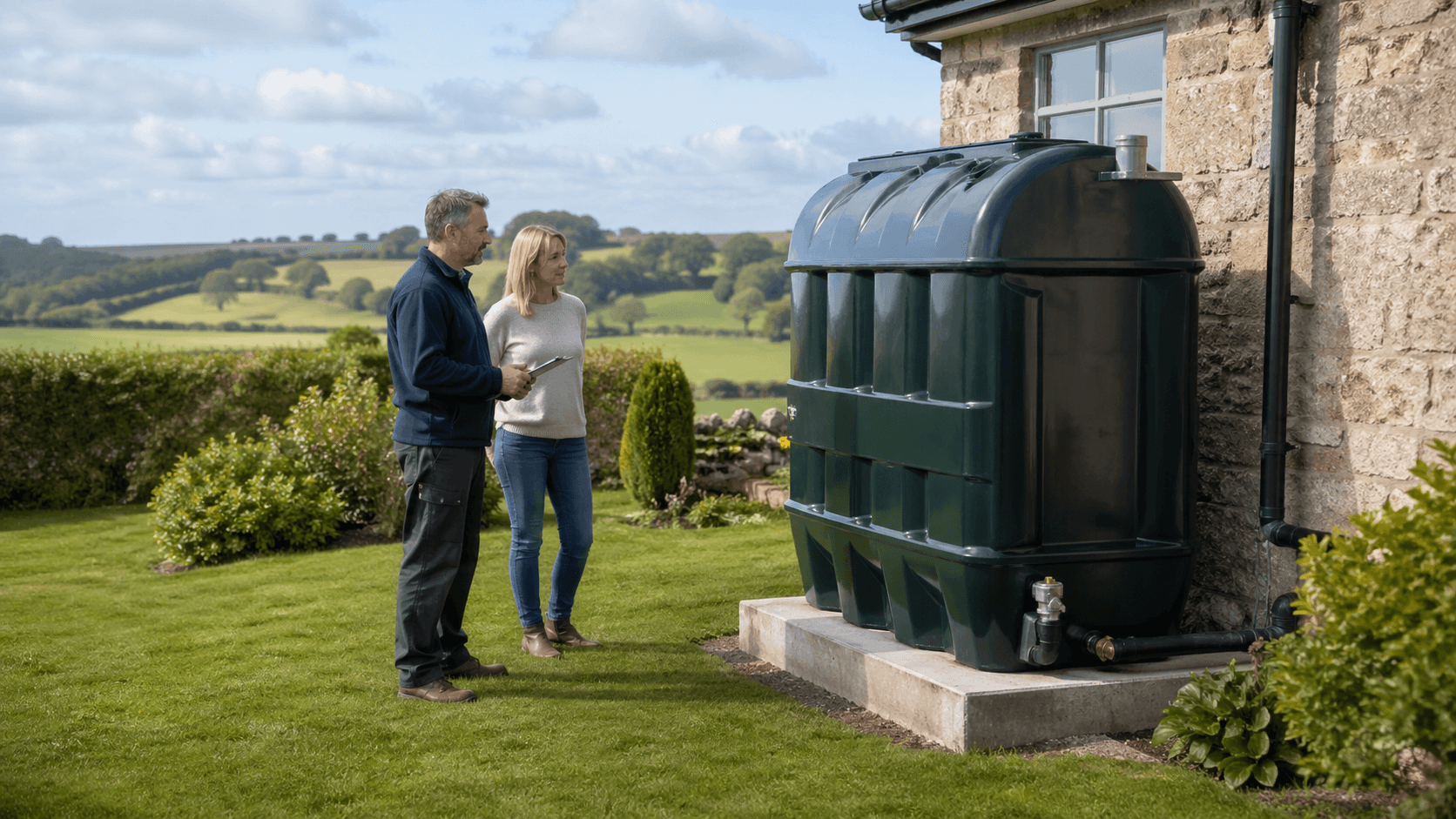
Best Heating Oil Tank for Rural Properties in the UK
For many rural homes across the UK, heating oil remains one of the most practical ways to heat the property, especially in areas that are not connected to the mains gas network. But choosing the right heating oil tank for a rural property is not just about picking a size and placing an order. The tank needs to suit your home, your fuel usage, your delivery access, your outdoor space and the level of protection required for the surrounding environment.
Rural properties often come with different challenges compared with town or city homes. Driveways may be longer, access may be more limited, winter deliveries can be affected by poor weather, and tanks may be more exposed to open land, strong winds or lower temperatures. This makes the right tank choice especially important.
In this guide, we’ll look at the best type of heating oil tank for rural homes, including bunded tanks, single skin tanks, tank capacity, security features, placement and supplier considerations.
Why Rural Properties Need the Right Heating Oil Tank
A domestic heating oil tank is a long-term investment. For rural homeowners, it plays a vital role in keeping the property warm and supplied with fuel throughout the year.
The right tank can help you:
Reduce the risk of running low during winter
Store enough fuel for your household needs
Improve protection against leaks and spills
Make deliveries easier and safer
Support better long-term heating oil management
Protect your property, land and nearby water sources
Because rural properties are often further away from suppliers and may be harder to reach during bad weather, choosing a suitable tank capacity and maintaining good access are especially important. Guides for rural tank selection commonly highlight capacity, durability, delivery access and environmental protection as key factors for countryside homes.
Bunded Oil Tanks vs Single Skin Oil Tanks
When choosing a heating oil tank for a rural property, the two main options are usually bunded oil tanks and single skin oil tanks.
A single skin oil tank has one layer of protection. It stores the oil in a single container and is often cheaper to buy, but it provides less protection if the tank becomes damaged or starts to leak.
A bunded oil tank has an inner tank and an outer protective layer. The outer layer acts as a secondary containment system, helping to reduce the risk of oil escaping into the surrounding ground if the inner tank fails. This is why bunded tanks are widely seen as the safer and more future-ready option for many domestic and rural settings.
For rural properties, a bunded tank is often the better choice because it provides extra protection where the tank may be exposed to harsher weather, uneven ground, open land or nearby drainage and watercourses.
For a clear explanation of how bunded tanks work, this guide from Oil Tanks Plus on how bunded oil tanks function and protect the environment is a useful supporting read.
Is a Bunded Tank Always Needed?
Not every domestic property will automatically need a bunded tank, but many installations do require one depending on the tank size, location and environmental risk. UK oil storage rules often require bunding in higher-risk circumstances, such as larger storage volumes, non-domestic use or locations near drains, rivers, wells or other sensitive areas. Government guidance also explains the role of secondary containment, including bunds, in catching oil if a leak occurs.
For rural properties, bunded tanks are often recommended because they offer stronger protection and reduce the risk of contamination if a leak occurs. This can be particularly important where tanks are located near fields, ditches, streams, private water supplies or drainage routes.
If you are unsure whether your property needs a bunded tank, it is best to get advice from a qualified professional before installation or replacement.
Choosing the Right Oil Tank Capacity
Tank capacity is one of the most important decisions for rural homeowners. A smaller tank may cost less upfront, but it can mean more frequent deliveries. A larger tank can give you more fuel security, especially during colder months when usage increases and supplier demand is higher.
For rural homes, larger tanks are often preferred because they can:
Reduce the number of deliveries needed
Help you prepare for winter in advance
Lower the risk of running out during bad weather
Give more flexibility when ordering fuel
Support larger homes with higher heating demand
Some rural homeowners choose tanks of around 2,000 litres or more to maintain a stronger fuel supply through winter, although the right size depends on the property, household usage, available space and installation requirements.
If your current tank regularly runs low or needs refilling more often than expected, it may be worth reviewing whether the capacity still suits your home.
Delivery Access Matters
Rural heating oil delivery depends heavily on access. Even the best tank can become difficult to manage if the delivery driver cannot reach the fill point safely.
When planning oil tank installation or replacement, consider:
Can the delivery vehicle access the property safely?
Is the fill point easy to reach?
Is the route clear of gates, parked vehicles or obstacles?
Is the tank visible and accessible in poor weather?
Can the driver complete the delivery without crossing unsafe ground?
Good access makes deliveries quicker, safer and more reliable. It can also reduce stress during winter when demand for rural heating oil delivery is higher.
For properties with long driveways, farm tracks or restricted access, placement should be planned carefully before choosing the final tank position.
Durability and Weather Resistance
Rural oil tanks are often more exposed to the elements. Strong winds, heavy rain, frost, sunlight and open surroundings can all affect the long-term condition of the tank and its base.
When choosing a domestic heating oil tank, look for a tank that is designed for outdoor use and suitable for the installation environment. Plastic tanks are common for domestic use because they are resistant to rust, while steel tanks may be preferred in certain settings where additional strength or fire protection is required.
The base is just as important as the tank itself. A heating oil tank should sit on a stable, level and suitable base that can support the full weight of the tank when filled. If the base cracks, sinks or becomes unstable, it can place stress on the tank and pipework.
Security Features for Rural Oil Tanks
Oil tank security can be a concern for rural homeowners, particularly where tanks are located away from the main property or are not easily visible.
Useful security features may include:
Lockable tank lids
Secure fill points
Tank alarms
Oil level monitors
Good lighting near the tank area
A visible but protected tank location
Regular checks of fuel levels
A tank alarm or remote oil monitor can help alert you to sudden drops in fuel level, which may indicate a leak or theft. Keeping the tank area tidy and checking levels regularly can also help you spot problems sooner.
Where Should a Rural Heating Oil Tank Be Placed?
Tank placement should balance safety, compliance, delivery access and practicality. A tank should not simply be placed wherever there is spare space. The location needs to be suitable for the property and should take into account fire safety, environmental risk, access, base stability and distance from buildings, boundaries, drains and water sources.
A poor location can make refuelling harder, increase environmental risk or make future servicing more complicated. Before installing or replacing a tank, it is sensible to seek professional advice.
For rural sites, extra thought may be needed if the tank is near:
Fields or agricultural land
Private water supplies
Streams, ditches or ponds
Drainage channels
Outbuildings or barns
Narrow access routes
Uneven or sloping ground
The right location can make your heating oil storage safer and easier to manage long term.
Choosing a Trusted Heating Oil Supplier
Once your tank is suitable, the next priority is choosing a reliable heating oil supplier. Rural homeowners need confidence that their supplier can provide clear pricing, dependable delivery and useful support throughout the year.
When comparing suppliers, look for:
Transparent pricing
Reliable rural delivery coverage
Helpful customer service
Clear communication
Flexible delivery support
Local knowledge
A straightforward quote process
OTP Energy supports customers looking for reliable heating oil delivery and practical fuel support. You can learn more about the company through the OTP Energy website or visit the about section to find out more about who they are and how they help customers manage their heating oil needs.
Should You Replace an Older Oil Tank?
If your current tank is old, damaged, undersized or difficult to access, replacement may be the safest long-term option.
Warning signs to look for include:
Cracks or splits
Rust or corrosion
Bulging or distortion
Oil smells
Visible staining
Leaking fittings
An unstable base
A faulty gauge
Frequent concerns about running low
A damaged tank should not be ignored. Leaks can be expensive, disruptive and harmful to the surrounding environment. If you notice any warning signs, arrange a professional inspection before refilling the tank.
Final Thoughts
The best heating oil tank for a rural property is usually one that offers the right balance of capacity, protection, durability, access and security. For many rural homeowners, a bunded oil tank is the preferred option because it provides an additional layer of protection and can help reduce the risk of leaks affecting the surrounding land.
Capacity is also key. Rural properties may benefit from a larger tank that reduces delivery frequency and provides more confidence during colder months. Just as importantly, the tank should be placed in a safe, accessible location and supported by a reliable heating oil supplier.
If you rely on heating oil for your rural home, taking the time to choose the right tank and supplier can make your heating setup safer, easier to manage and more dependable throughout the year.
For reliable heating oil support, visit OTP Energy and request a quote for your next delivery.
Leave a Reply
You must be logged in to post a comment.