

How Often Should You Inspect a Heating Oil Tank?
If your home relies on heating oil, regular tank checks are one of the simplest ways to avoid expensive problems later on. A heating oil tank can last for years, but only if it is kept in good condition and inspected often enough to catch early warning signs. Cracks, corrosion, unstable bases, leaks, and damaged fittings can all become far more serious if they go unnoticed. GOV.UK advises homeowners to take time to check their heating oil tank and look out for signs such as oil smells, leaks, corrosion, damaged pipework, or tanks that are no longer level.
So, how often should you inspect a heating oil tank? The best answer is a mix of regular visual checks and more thorough professional inspections when needed. That approach helps homeowners stay on top of small issues before they become safety, environmental, or replacement problems. If you are also thinking ahead about fuel supply and support, you can explore OTP Energy or view the company’s heating oil services for delivery and related assistance.
Carry out quick visual checks regularly
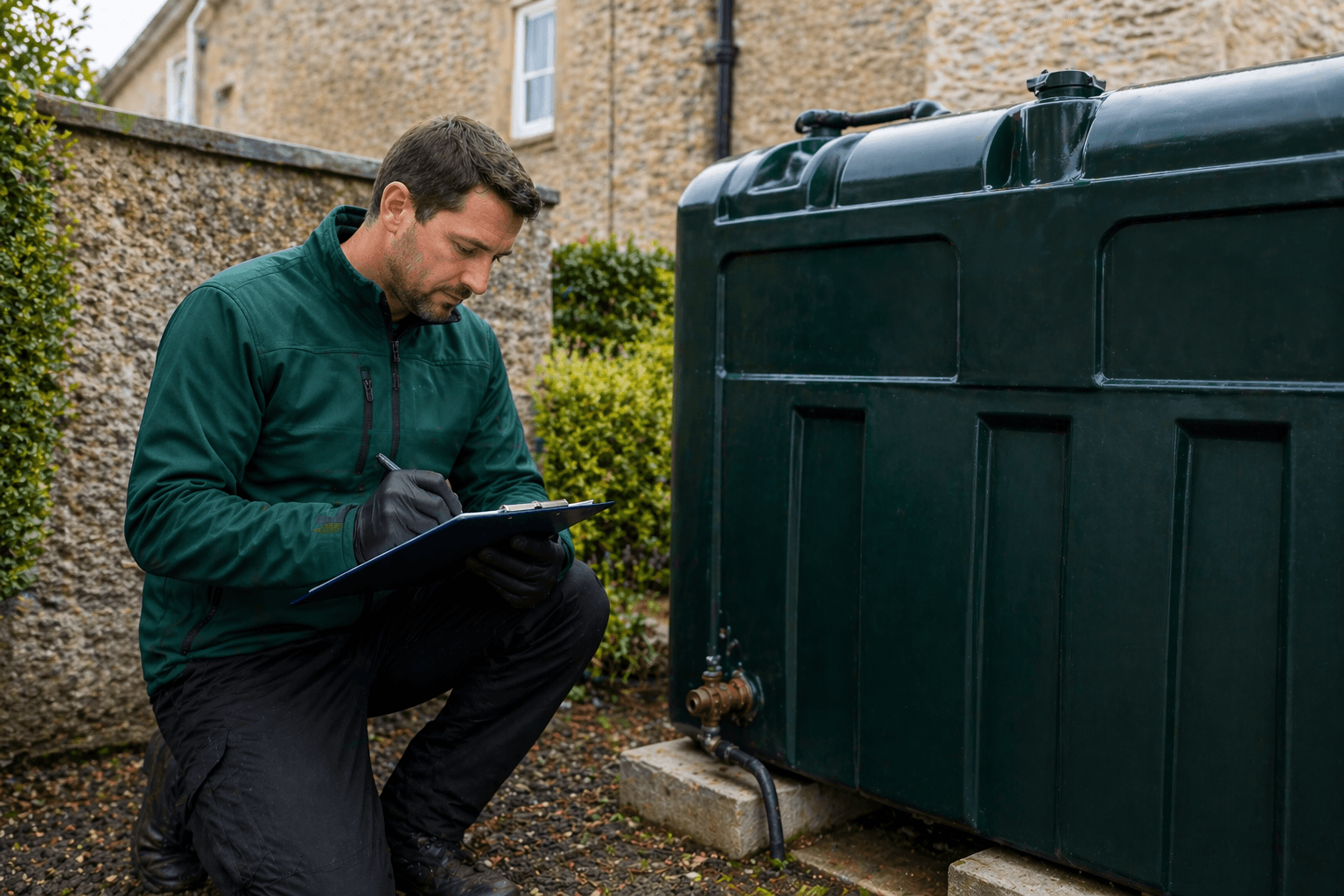
A quick visual check should be part of normal tank ownership. For most homeowners, a monthly check is a sensible routine, especially during periods of heavy use in colder months or after extreme weather. The goal is not a technical inspection, but a simple look over the tank and the area around it so that obvious problems do not get missed. GOV.UK says homeowners should check for things like strong oil smells, drips, wet patches, corrosion, damaged pipework, vegetation hiding the tank, and whether the tank appears to have shifted or become uneven.
During a routine check, look for visible cracks or bulging on plastic heating oil tanks, rust on steel tanks, staining near the base, loose fittings, damaged valves, or signs that the tank is leaning. The surrounding area matters too. If weeds, stored items, or overgrowth are hiding the base or pipework, it becomes harder to spot early signs of trouble.
Arrange a more thorough inspection at least annually
Alongside routine visual checks, a more thorough inspection once a year is the strongest baseline for most domestic setups. Oil Tank Supermarket’s current homeowner guidance says domestic tanks should be inspected regularly and recommends annual inspection, with the inspecting person advising when repair or replacement may be needed.
An annual inspection is especially worthwhile if your tank is older, exposed to the elements, or has shown warning signs before. A proper inspection can look more closely at the tank body, base, fittings, and overall condition in a way that a quick homeowner check cannot. That gives you a better chance of dealing with problems before they turn into spills, system failure, or emergency replacement.
Some tanks need checking more often
Not every heating oil tank faces the same level of risk. Older tanks may need closer attention, and tanks that are exposed to strong weather, direct sunlight, or awkward siting conditions can deteriorate faster. Steel tanks may be more vulnerable to rust and corrosion, while plastic tanks can show cracking, fading, or bulging over time. Heating oil tanks on unstable or weathered bases also deserve more frequent checks because movement underneath the tank can create stress on the structure and fittings.
If your tank has had previous issues, is partly hidden from view, or sits in a spot where leaks could go unnoticed, increasing the frequency of your visual checks is a sensible step. What matters most is not sticking rigidly to one timetable, but making sure the tank is being checked often enough for its age, condition, and location.
What warning signs should you look for?
When checking your heating oil tank, there are several signs that should never be ignored. GOV.UK advises homeowners to take action if they notice oil smells, damp patches, drips, corrosion, damaged pipework, or if the tank is no longer level. Oil Tank Supermarket’s recent guidance also highlights damp patches around the base, rust on steel tanks, and other visible signs of damage as warning signs that need attention.
Here are the main things to look for:
- cracks, bulges, or distortion in the tank body
- rust or corrosion, especially around seams and joints
- loose, damaged, or leaking pipework and fittings
- damp patches, staining, or a strong oil smell near the heating oil tank
- an uneven, sinking, or weakened base
- overgrown vegetation or clutter hiding key parts of the installation
If you spot any of these, it is worth acting quickly rather than waiting to see if it gets worse.
When should you call in a professional?
A homeowner can and should carry out basic visual checks, but there is a clear point where professional help becomes the right move. If you notice a leak, signs of corrosion, instability, strong oil smells, or anything that suggests the tank may be compromised, it is best to get expert advice. GOV.UK’s message to homeowners is straightforward: checking heating oil tanks matters because unnoticed problems can lead to pollution and costly damage.
This is where OTP Energy can fit naturally into the picture for homeowners thinking more broadly about fuel support and dependable service. If you need help planning your heating setup, arranging supply, or reviewing your options, you can visit the main OTP Energy website or see their services page for more information.
Final thoughts
So, how often should you inspect a heating oil tank? A good rule is to carry out a quick visual check regularly, ideally around once a month, and to treat an annual inspection as a strong minimum for long-term care. That combination gives you a practical way to spot issues early, protect your property, and reduce the risk of expensive repairs or environmental problems. GOV.UK’s homeowner advice and current Oil Tank Supermarket guidance both point in the same direction: regular checks matter, and annual inspection is a sensible benchmark for domestic oil storage.
If you want support with your wider heating oil needs, from planning ahead to arranging supply, visit OTP Energy or explore their services. And for extra reading on domestic inspection routines, this guide on how often to inspect oil tanks is a useful companion piece alongside the official GOV.UK advice.