

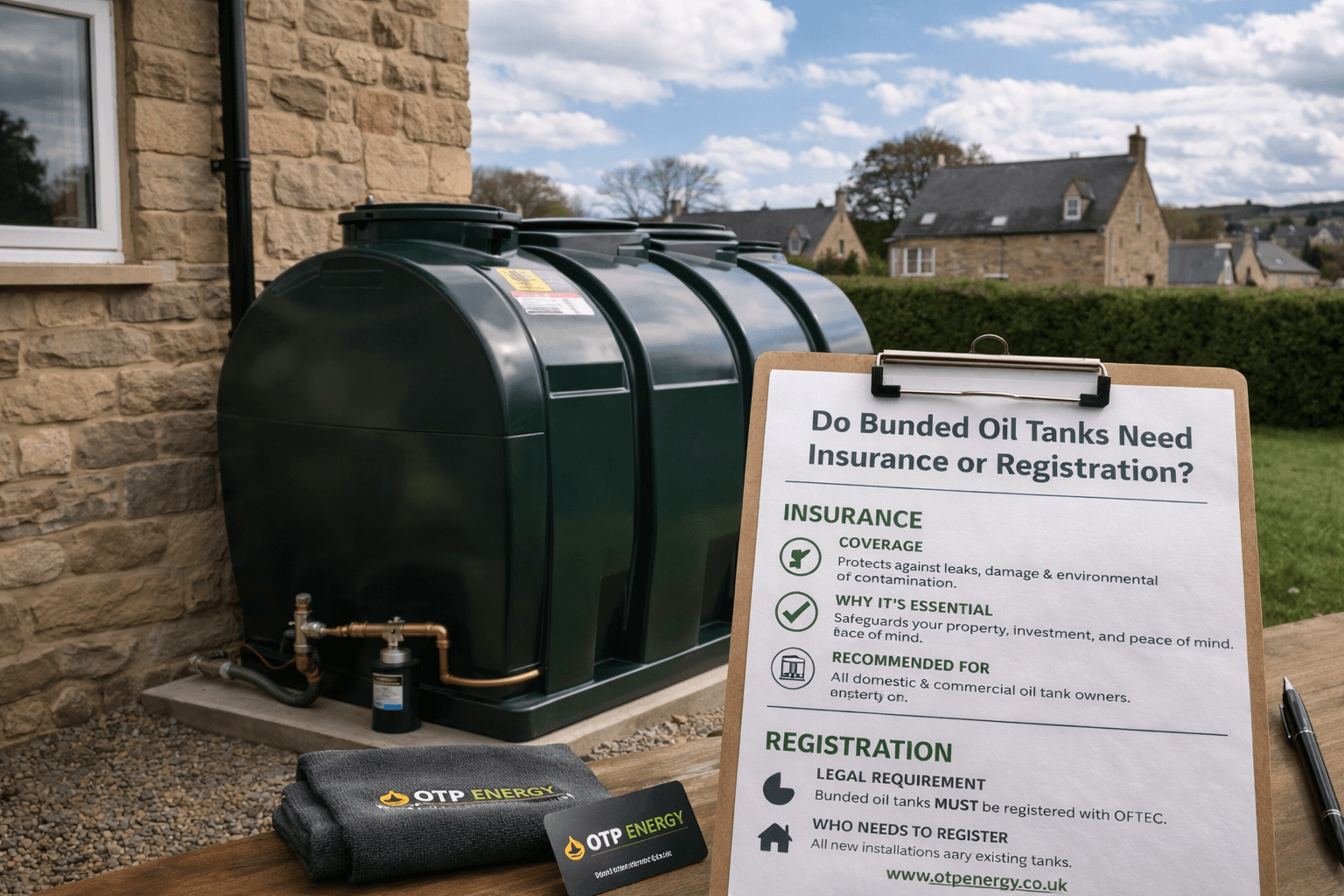
Do Bunded Oil Tanks Need Insurance or Registration in the UK?
If you have a bunded oil tank at home or you are thinking of installing one, it is natural to ask whether you need to register it, insure it, or notify anyone about it. The answer is a little more nuanced than a simple yes or no. In most standard domestic situations, there is no separate national registration requirement for a home heating oil tank, but there are still important legal and practical responsibilities around safe storage, pollution prevention, and insurance cover.
A bunded oil tank is designed with an inner tank and an outer protective layer, helping contain leaks before they spread into the ground or nearby drains. That extra protection is one reason bunded tanks are widely recommended for domestic properties and are often the preferred option where there is a greater risk of pollution. GOV.UK’s oil storage guidance focuses heavily on preventing spills, protecting watercourses and drains, and ensuring tanks are suitable for their setting.
Do Bunded Oil Tanks Need to Be Registered?
For most homeowners using heating oil for domestic purposes, there is usually no separate registration process simply because the tank is bunded. What matters more is whether the tank is installed and maintained in line with current rules and good practice. The regulatory picture changes when oil storage is used for business, commercial premises, or other non-domestic purposes, because stricter storage rules can apply depending on capacity, location, and risk. GOV.UK’s guidance on storing oil at a home or business sets out more formal requirements for business storage, including bund capacity and protective measures.
What this really means is that most homeowners do not need to “register” a bunded tank in the way they might register a vehicle or a licensed activity. But they do need to make sure the tank is installed in a compliant location, properly supported, and kept in good condition. That is the part that matters most from both a legal and insurance point of view.
Should You Tell Your Insurance Provider About a Bunded Oil Tank?
Yes, in practice, it is wise to tell your insurer about it. While policies differ, OFTEC says many home insurance policies may cover certain losses from an oil spill, such as damage to the home or lost oil, but they often do not fully cover environmental investigation or clean-up costs, especially where land or water pollution is involved. GOV.UK has also advised householders to check whether their insurance covers clean-up costs on their own land and neighbouring land.
That makes insurer notification important in situations such as:
- installing a new oil tank
- replacing an older or damaged tank
- increasing storage capacity
- changing from domestic-only use to mixed or commercial use
- discovering a leak, spill, or suspected spill
A bunded tank may reduce risk, but it does not remove it entirely. Insurers will usually care more about the overall installation quality, maintenance history, and whether there is any sign of neglect or previous damage than the word “bunded” on its own. That is why a professionally installed tank with good maintenance records is normally the safest route.
Why Insurance Still Matters Even With a Bunded Tank
A common mistake is assuming a bunded tank means you no longer need to think about insurance. In reality, heating oil leaks can still become expensive. OFTEC warns that standard home insurance may not fully protect homeowners against environmental clean-up or third-party pollution claims if oil escapes and affects neighbouring land or groundwater.
That is why bunded oil tank insurance questions are less about whether insurance is legally “required” in a stand-alone sense and more about whether your existing home or business policy gives adequate cover for the real risks involved. For commercial premises, environmental liability can be even more significant, because the consequences of a pollution incident may be broader and the regulatory expectations stricter.
Maintenance Records and Inspections Matter
Whether your tank is domestic or commercial, maintenance is one of the biggest factors in reducing both risk and disputes. Tuffa advises regular checks and highlights the importance of keeping the tank area visible and inspecting for signs of wear, damage, or deterioration. Keeping records of inspections, servicing, and any repairs can also help show that the system has been properly looked after.
Simple good practice includes checking for:
- cracks or bulging
- stains, damp patches, or oil smells
- unstable bases or poor support
- damaged pipework or fittings
- vegetation or debris hiding the tank exterior
These checks are not just sensible from a safety point of view. They can also help if you ever need to make an insurance claim or show that you have acted responsibly after noticing a problem.
Domestic vs Business Oil Tank Rules
This is where the difference really matters. A home heating oil tank is not treated in exactly the same way as a business oil storage tank. GOV.UK’s business guidance sets out more specific rules around oil storage containers, secondary containment, pipework protection, and spill prevention. For homeowners, the focus is still on safe installation and preventing pollution, but the compliance route is generally less formal than it is for business premises.
So if your bunded oil tank is connected to a business, rented site, agricultural operation, or commercial premises, it is worth checking the rules more carefully and making sure your insurer understands the use case. Commercial use can change both your compliance obligations and the type of cover you need.
Final Thoughts
In most standard domestic cases, bunded oil tanks do not need separate registration, but they do need to be installed, maintained, and managed properly. Insurance is not something to ignore either. A bunded tank lowers the risk of serious leaks, but it does not guarantee that every spill-related cost will be covered under a standard policy. Checking your insurer’s wording, keeping good maintenance records, and following current UK oil storage guidance are the best ways to protect both your property and your finances.
For more information, you can read the official GOV.UK guidance on storing oil at a home or business, browse Tuffa’s guide to heating oil tanks, visit the OTP Energy homepage, or see the company’s services page for support.
Leave a Reply