

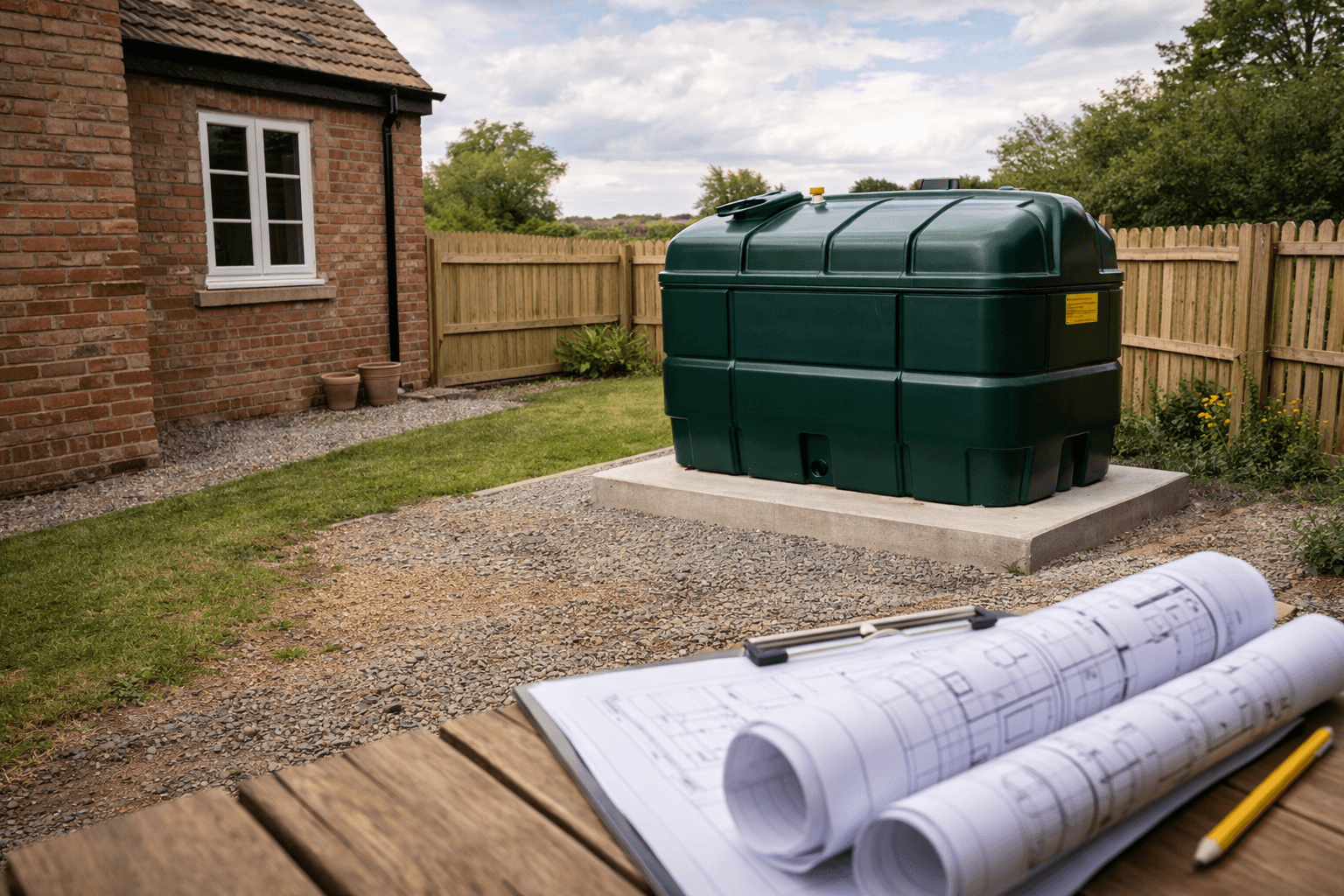
Do You Need Planning Permission for a Bunded Oil Tank? A Homeowner’s Guide
If you are planning to install a bunded oil tank at home, one of the first questions you will probably ask is whether planning permission is required. It is a sensible concern, especially when oil tank regulations can feel confusing and the consequences of getting it wrong can be expensive.
The good news is that many domestic oil tanks in England can be installed without full planning permission because they fall under permitted development. That said, there are still important conditions to meet. Tank size, overall height, where the tank sits on your property, and whether your home is listed or subject to planning restrictions can all affect the answer. The installation must also comply with building regulations, which are separate from planning rules.
In this guide, we will explain when planning permission is usually not needed, when it may be required, and what you should check before going ahead with a bunded oil tank installation.
What Is a Bunded Oil Tank?
A bunded oil tank is a tank-within-a-tank design. It has an inner tank that stores the oil and an outer protective layer that acts as secondary containment if the inner tank leaks. This added protection helps reduce the risk of oil escaping into the ground or nearby drains.
For many homeowners, bunded oil tanks are seen as the safer long-term option because they offer stronger environmental protection and extra peace of mind. In some installation scenarios, secondary containment is not just a preference but a requirement. GOV.UK states that a bund is needed in certain higher-risk locations, including where a spill could reach an open drain, where vent pipes cannot be seen during filling, within 10 metres of inland or coastal waters, or within 50 metres of a drinking water source.
Do You Normally Need Planning Permission for a Bunded Oil Tank?
In England, installing a fuel tank at a house is generally treated as permitted development, which means planning permission is often not required. However, that only applies if the installation stays within the national limits and conditions set out by Planning Portal. These include:
- The tank must be no more than 3,500 litres
- It must not be forward of the principal elevation of the original house
- The maximum overall height is 3 metres
- If the tank is within 2 metres of a boundary, the maximum height is 2.5 metres
- It must not result in more than half the land around the original house being covered by additions or other buildings
- Extra restrictions apply on designated land
- A tank within the curtilage of a listed building will require planning permission
So, for many standard domestic installations, the answer is no, you do not usually need planning permission. But that answer only holds if the installation clearly fits those rules.
When Planning Permission May Be Required
There are several situations where you should not assume your oil tank can be installed without a planning application.
1. Your tank exceeds 3,500 litres
Planning Portal states that permitted development for household fuel tanks applies only up to 3,500 litres. If the tank is larger than that, you should expect extra scrutiny and likely need to check directly with your local authority. GOV.UK also says that if your storage container holds 3,501 litres or more, you must follow the regulations for businesses.
2. The tank is in front of the house
If the proposed tank location is forward of the wall forming the principal elevation of the original house, it falls outside the normal permitted development rules.
3. The tank is too tall or too close to a boundary
Height matters. A domestic fuel tank can be up to 3 metres high, but if it sits within 2 metres of a boundary, the maximum height drops to 2.5 metres.
4. Your property is listed or has restricted rights
Planning Portal is clear that any container within the curtilage of a listed building requires planning permission. It also warns that planning conditions, Article 4 Directions, or other local restrictions may remove or limit permitted development rights.
5. Your home is on designated land
Additional rules apply in places such as National Parks, the Broads, Areas of Outstanding Natural Beauty, conservation areas, and World Heritage Sites. These locations can bring tighter controls, so it is worth checking before any installation starts.
Planning Permission Is Not the Same as Building Regulations
One of the biggest sources of confusion is that homeowners often treat planning permission and building regulations as the same thing. They are not.
Even if you do not need planning permission, GOV.UK says you must meet building regulations if you have a new or replacement oil storage container installed at your home in England. If you use an installer registered with a competent person scheme, they can self-certify compliance. If you do not, you may need to submit a Building Control Notice to your local council and arrange an inspection yourself.
That distinction matters because a homeowner can be within planning rules but still run into problems if the installation does not meet the required building standards.
Why Local Checks Still Matter
National guidance is a strong starting point, but it is not the final word in every case. Planning Portal describes its own fuel tank page as an introductory guide and says additional local rules may affect what permission is needed. It also notes that the guidance applies to England, and that policy in Wales may differ.
That means if your property has unusual access, sits in a sensitive location, is listed, or you are simply unsure whether the siting is acceptable, it is worth checking with your local planning authority before the installation begins.
Choosing the Right Installer and Equipment
A compliant installation is about more than just whether the tank is bunded. It also comes down to proper siting, safe installation, and choosing the right supporting products.
OTP Energy supplies heating oil products and accessories through its shop, including oil additives, tank gauges, water absorbers, and access to bunded oil tank options. The site also points customers toward specialist oil tank support where needed.
If you are reviewing your current setup, simple additions such as a tank gauge or water management product can help you monitor performance and reduce the chance of being caught out by low fuel levels or contamination. OTP Energy also states that it delivers heating oil to homes and businesses across the UK, making it a useful starting point if you are thinking about both storage and supply together.
Common Mistakes to Avoid
Homeowners often run into trouble when they assume one rule covers everything. A few of the most common mistakes include:
- Assuming “bunded” automatically means no permission is needed
- Confusing planning permission with building regulations
- Overlooking listed building status or local planning restrictions
- Choosing a tank size or position before checking the permitted development limits
- Failing to think about spill risk, nearby drains, or water sources
The safest approach is to treat a new oil tank installation as both a planning and compliance project, not just a delivery and placement job.
Final Thoughts
So, do you need planning permission for a bunded oil tank?
In many straightforward domestic cases in England, probably not. A home oil tank is often permitted development if it stays within the national size, height, and siting limits. But that does not remove the need to check the details. Listed buildings, designated land, local planning restrictions, and larger tanks can all change the picture. On top of that, new or replacement tanks still need to comply with building regulations.
If you are planning a new installation, replacing an older tank, or reviewing the products that support your oil storage setup, visit OTP Energy to learn more about the company and explore the shop for oil-related products and tank accessories. For the official rules, you can also review the Planning Portal guidance and the GOV.UK page on storing oil at your home before moving ahead.
Leave a Reply