

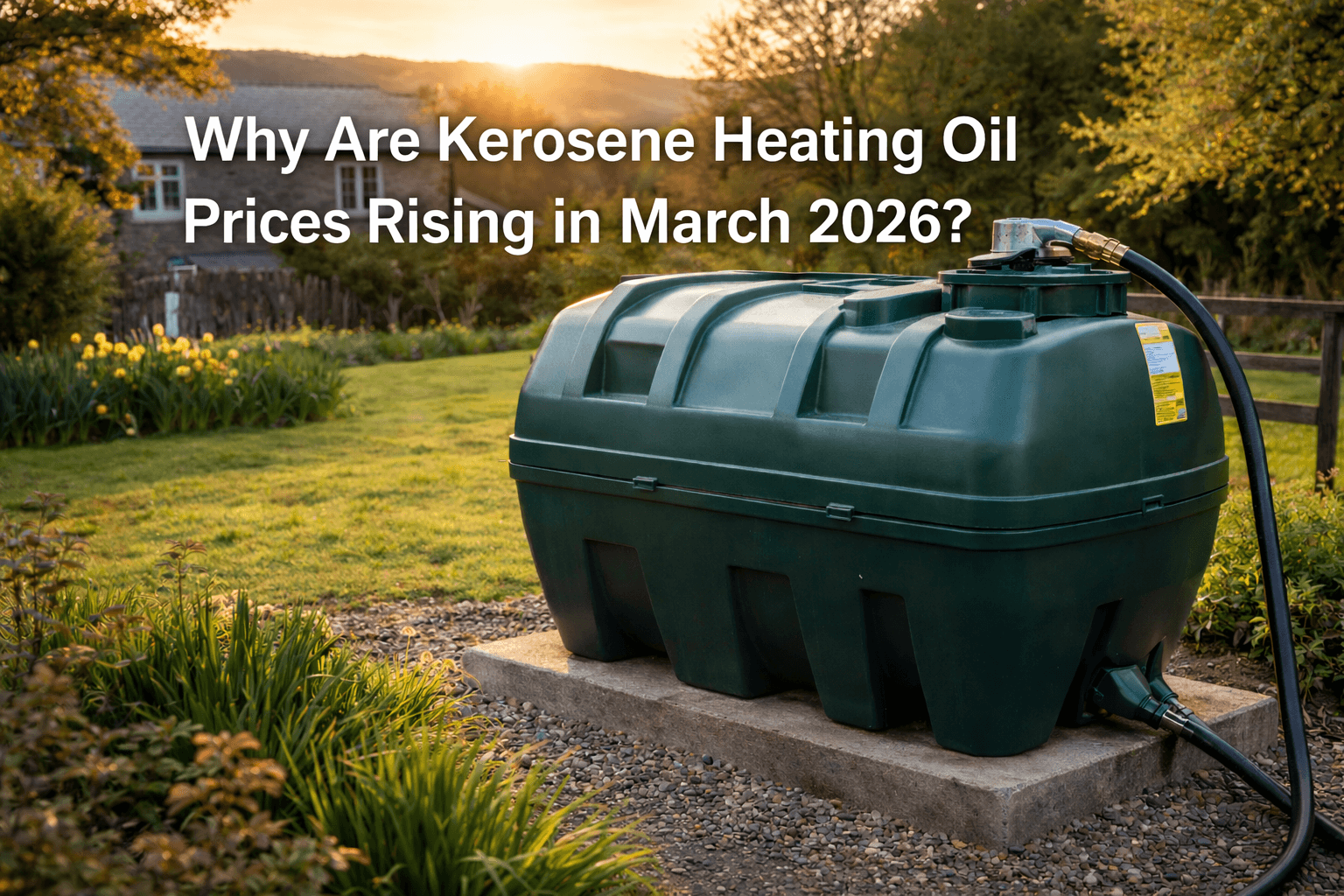
Why Are Kerosene Heating Oil Prices Rising in March 2026?
Across the UK, many households that rely on heating oil have noticed a noticeable increase in kerosene prices during early 2026. While seasonal fluctuations are normal in the heating oil market, the rise seen in March has been more significant than expected, leaving many homeowners asking what’s driving the change.
From global geopolitical tensions to supply chain pressure and currency movements, several factors are currently influencing the cost of kerosene across the country. Understanding why heating oil prices move can help homeowners plan their fuel purchases more effectively and avoid unexpected costs when topping up their tanks.
In this guide, we explain the main reasons heating oil prices are rising in March 2026 and what it could mean for households across the UK.
Heating Oil Prices in the UK Are Climbing
Heating oil prices in the UK are influenced by several interconnected factors, including global oil markets, domestic demand, currency movements, and international political events.
Recent reports highlight growing concern across the country as kerosene prices have increased rapidly in early March. Global tensions and supply concerns are putting pressure on oil markets, which in turn impacts the cost of refined fuels such as heating oil used by millions of UK homes.
According to recent reporting from the BBC, geopolitical instability and wider energy market pressures are contributing to rising fuel costs across Europe and the UK.
https://www.bbc.co.uk/news/articles/cr5lz0vgy52o
Because heating oil is derived from crude oil, any movement in global energy markets quickly affects domestic heating oil prices.
Global Events Are Driving Oil Market Volatility
One of the biggest drivers behind the March 2026 price rise is global uncertainty surrounding oil supply. Political tensions and instability in key oil-producing regions can disrupt supply expectations and cause international energy markets to react quickly.
Even if physical supply has not yet been disrupted, the risk of disruption alone can push crude oil prices higher, which then feeds directly into the cost of kerosene heating oil.
Energy markets operate on expectations as much as reality. When traders anticipate potential supply issues, wholesale prices often increase immediately, and those changes eventually reach domestic fuel markets.
This is why heating oil prices can rise quickly even when supply remains available.
Heating Oil Prices Follow Crude Oil Markets
Kerosene heating oil is produced during the crude oil refining process, meaning its price is directly linked to global oil markets.
When crude oil becomes more expensive to purchase, transport, or refine, the cost of heating oil increases as well. This relationship means events affecting crude oil production, transport routes, or refining capacity can quickly influence domestic heating oil prices in the UK.
Some of the most common factors that influence heating oil prices include:
geopolitical tensions affecting oil exports
changes in refinery production
global fuel demand
shipping disruptions
international currency fluctuations
These pressures combine to influence the wholesale price suppliers pay before fuel is delivered to homes across the UK.
Winter Demand Still Influences Prices
Although the UK is moving towards spring, heating oil demand remains relatively high after the winter heating season.
During colder months, households rely heavily on oil-fired boilers to maintain indoor temperatures. When thousands of homes require heating oil at the same time, suppliers must increase wholesale purchases, which can drive prices upward.
Cold weather periods often cause sudden spikes in demand, particularly in rural areas where homes rely entirely on oil heating rather than mains gas.
Demand pressures usually begin to ease once temperatures rise and heating usage decreases during late spring and summer.
Check Your Oil Tank for Leaks or Damage
With heating oil prices rising, it’s also a good time to ensure your oil tank is in good condition and capable of safely storing fuel. Even small cracks, corrosion, or loose fittings can lead to slow leaks that waste expensive heating oil and potentially cause environmental damage.
Homeowners should visually inspect their tank every few weeks, looking for signs such as oil smells, damp patches around the base, rust spots on steel tanks, or hairline cracks in plastic tanks. Make sure the tank sits level on a stable base and that the lid, outlet, and pipe connections are secure. Catching minor issues early can prevent costly fuel loss and ensure your tank remains safe and compliant for long-term heating oil storage.
Currency Movements Also Affect Fuel Prices
Oil is traded globally in US dollars, which means exchange rates play a significant role in determining how much UK suppliers pay for fuel imports.
When the British pound weakens against the dollar, it becomes more expensive for UK suppliers to purchase crude oil and refined fuels. These higher import costs are often reflected in heating oil prices across the country.
Even small fluctuations in exchange rates can influence wholesale energy markets, especially when combined with rising crude oil prices.
Supply Chains and Refining Capacity
The structure of the UK fuel supply chain has also changed over the years. The country now relies more heavily on imported refined fuels due to reduced domestic refining capacity.
As a result, the UK heating oil market is more sensitive to global supply chain issues such as:
shipping disruptions
refinery maintenance or shutdowns
transport costs
storage limitations
When multiple factors occur simultaneously, they can place upward pressure on heating oil prices.
What Could Happen to Heating Oil Prices Next?
Predicting fuel prices is always difficult because global markets react quickly to political and economic developments.
However, several factors could influence heating oil prices over the coming months:
Seasonal demand changes
Heating oil consumption typically decreases during spring and summer.
Global oil market stability
If geopolitical tensions ease, crude oil prices may stabilise.
Currency movements
Changes in the value of the pound against the US dollar could influence import costs.
Energy market developments
Government energy policies and international agreements may also affect fuel prices in the longer term.
Managing Heating Oil Costs
Although price fluctuations are unavoidable, homeowners can take steps to reduce heating oil costs over time.
Some practical strategies include:
Monitoring your oil levels
Avoid letting your tank run too low during volatile market periods.
Comparing heating oil suppliers
Prices can vary between suppliers depending on location and order size.
Ordering larger quantities
Bulk deliveries often reduce the price per litre.
Buying during warmer months
Heating oil prices are often lower outside peak winter demand.
How OTP Energy Helps Customers Stay Informed
At OTP Energy, we understand that heating oil prices can fluctuate and that homeowners want clear information about what’s happening in the energy market.
Our goal is to help customers stay informed, understand price changes, and make confident decisions about their heating oil purchases.
You can learn more about our services on our website OTP Energy.
If you have questions about heating oil pricing or need assistance with a delivery, our team is always happy to help.
https://otpenergy.co.uk/contact-us/
Final Thoughts
The rise in kerosene heating oil prices during March 2026 is the result of several overlapping factors, including geopolitical tensions, global oil market movements, seasonal demand, and currency fluctuations.
While these forces are largely outside the control of individual suppliers, understanding how they affect heating oil prices can help homeowners plan ahead and manage their heating costs more effectively.
As the energy market continues to evolve, staying informed about fuel pricing trends will remain an important part of managing home heating systems across the UK.
FAQ’s
Why are heating oil prices rising in the UK in 2026?
Heating oil prices in the UK are rising mainly due to geopolitical tensions affecting global oil markets, particularly conflict in the Middle East. Because kerosene heating oil is refined from crude oil, increases in global oil prices quickly influence domestic heating fuel costs.
Will heating oil prices fall later in 2026?
Heating oil prices often stabilise or fall during spring and summer when demand for heating decreases. However, global oil markets, political events, and currency exchange rates can still influence prices throughout the year.
When is the cheapest time to buy heating oil?
Heating oil is often cheapest during warmer months such as late spring and summer when demand is lower. Many homeowners choose to refill their tanks during this period to avoid winter price spikes.
Leave a Reply