

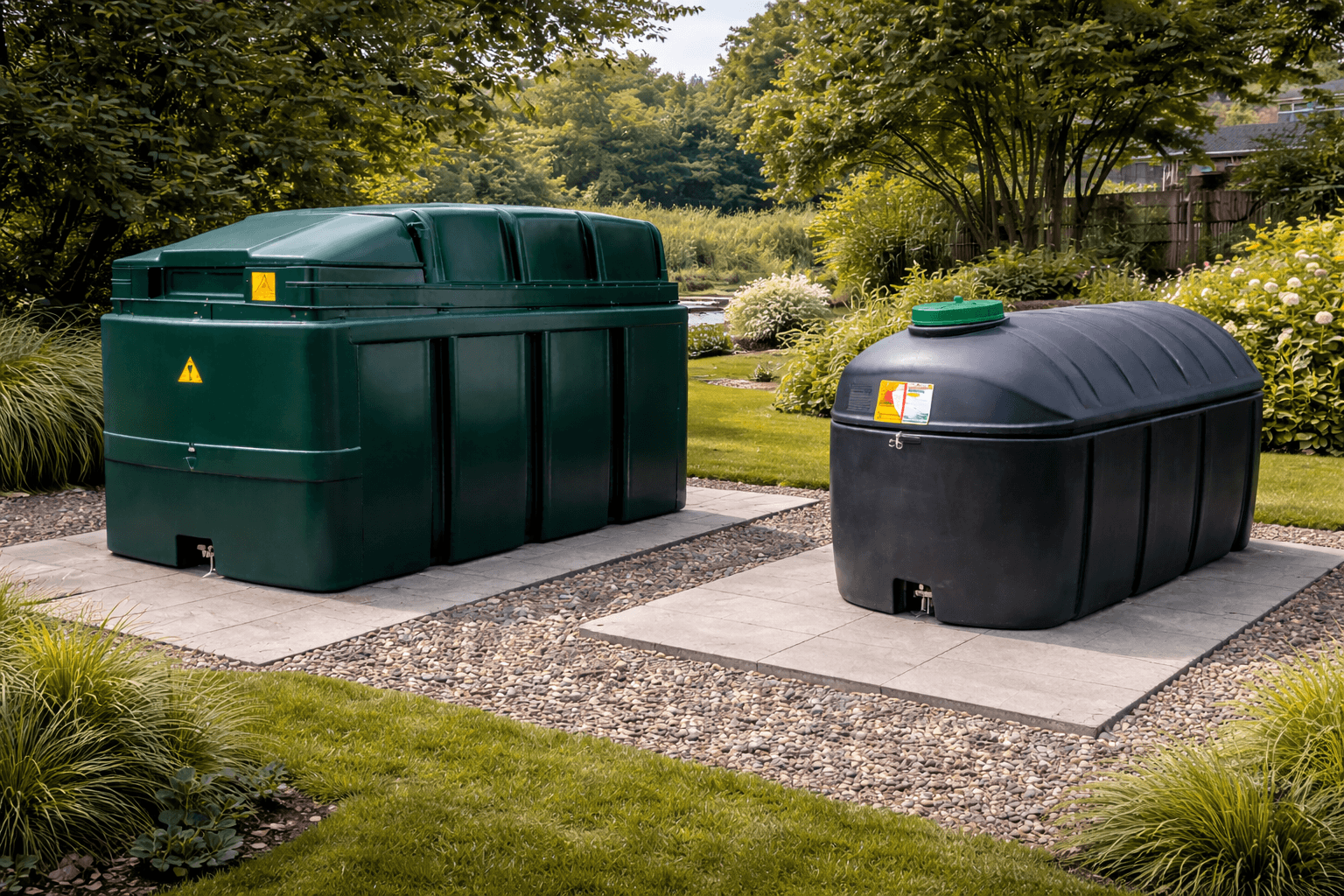
Bunded vs Single Skin Oil Tanks: Which Is Right for Your Property?
Choosing the right oil tank is a critical decision for homeowners and businesses that rely on heating oil. One of the most common questions asked is: should I choose a bunded or a single skin oil tank?
Each option has its advantages, costs, and compliance considerations. In this guide, we explain the difference between bunded and single skin oil tanks, compare safety and environmental protection, and help you decide which solution best suits your property and budget.
What Is a Bunded Oil Tank?
A bunded oil tank features a double-layer design. It consists of an inner tank that stores the oil and an outer containment layer (the “bund”) that captures any leaks or spills.
This secondary containment significantly reduces the risk of oil escaping into the environment, making bunded tanks the preferred choice under UK oil storage regulations.
Key benefits of bunded oil tanks include:
Enhanced protection against leaks and spills
Greater compliance with UK environmental laws
Reduced risk of soil and water contamination
Often favoured by insurers
You can read an in-depth comparison of bunded and single skin tanks here:
https://www.tuffa.co.uk/how-to-decide-between-a-bunded-or-single-skin-tank/
What Is a Single Skin Oil Tank?
A single skin oil tank has just one layer that directly holds the oil, with no secondary containment. These tanks are typically cheaper upfront and may be suitable for low-risk locations where regulations allow.
However, without a bund, any leak or failure can result in oil escaping into the surrounding area, potentially leading to expensive clean-ups and environmental damage.
Single skin tanks may be appropriate if:
The tank is far from watercourses and drains
Oil volume is relatively small
Local regulations permit their use
Bunded vs Single Skin Oil Tanks: Key Differences
Safety & Environmental Protection
Bunded tanks offer built-in spill protection, preventing oil from reaching soil or waterways
Single skin tanks carry a higher risk of leaks and contamination
Compliance with UK Regulations
UK oil storage rules often require bunded tanks in higher-risk situations, including:
Installations near rivers, drains, or wells
Larger oil storage capacities
Commercial or agricultural settings
In many cases, choosing a bunded tank helps ensure compliance and avoids costly enforcement action.
Cost Comparison: Short-Term vs Long-Term Value
While bunded oil tanks typically cost more initially, they often provide better long-term value.
Bunded oil tanks:
Higher upfront cost
Lower risk of fines, clean-up costs, and insurance claims
Often reduced insurance premiums
Single skin oil tanks:
Lower purchase price
Higher potential costs if leaks occur
May require earlier replacement or upgrades
When factoring in environmental risk and regulatory compliance, bunded tanks are often the more cost-effective option over time.
Which Oil Tank Is Best for Your Property?
Here are a few practical examples:
Residential homes near drains or water sources → Bunded oil tank recommended
Commercial premises or farms → Bunded oil tank usually required
Low-risk rural properties → Single skin tank may be acceptable
If you’re unsure, it’s always best to choose the safer option or speak to a professional supplier.
Browse Oil Tanks & Heating Solutions from OTP Energy
At OTP Energy, we supply reliable oil storage and oil delivery solutions as well as heating services tailored to your needs. Whether you’re upgrading an old tank or installing a new system, you can explore our full product range here:
https://otpenergy.co.uk/shop-2/
To learn more about our experience, values, and commitment to customer service, visit our About page.
Final Thoughts
Understanding the difference between bunded and single skin oil tanks is essential for making a safe, compliant, and cost-effective choice. While single skin tanks may appear cheaper initially, bunded tanks offer superior protection, regulatory peace of mind, and long-term savings.
By choosing the right oil tank for your property — and partnering with a trusted supplier like OTP Energy — you can protect your home, the environment, and your investment.
Leave a Reply