

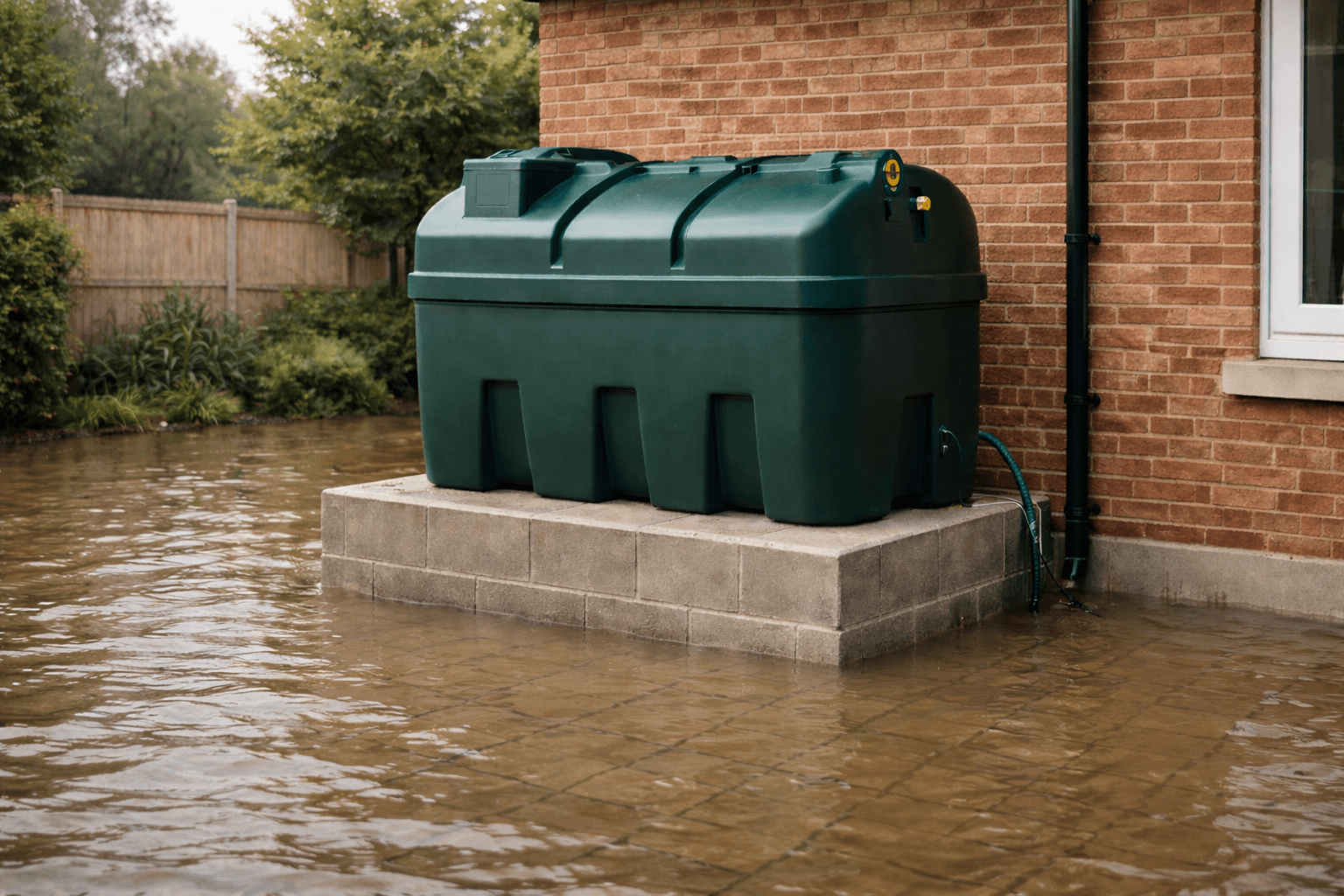
Oil Tank Installation in Flood-Prone Areas: What You Need to Know
An oil tank installation in a flood-prone area requires careful planning. With heavier rainfall and more frequent flooding becoming a reality across parts of the UK, poorly positioned or inadequately protected oil tanks present a serious risk to properties, the environment, and household finances.
Floodwater can cause oil tanks to float, shift, crack, or rupture, leading to leaks that contaminate land and watercourses. In this guide, we explain the key considerations for oil tank installations in flood-risk areas, including placement, protection measures, and how to reduce the risk of leaks and environmental damage.
Understanding the Risks of Oil Tanks in Flood Zones
Flooding is one of the most common causes of domestic oil tank failure. When water levels rise, tanks can become unstable, especially if they are not securely fixed or properly elevated. Even small amounts of escaping oil can cause extensive damage and costly clean-ups.
Local authorities regularly highlight the environmental impact of leaking oil tanks and the importance of prevention, particularly in flood-affected areas. This guidance from Westmorland and Furness Council explains how domestic oil tank leaks occur and why prevention is critical: https://www.westmorlandandfurness.gov.uk/your-environment/pollution/leaks-domestic-oil-tanks
Correct Oil Tank Placement Matters More Than Ever
One of the most effective ways to reduce flood risk is choosing the right location for your oil tank. Tanks should never be installed in areas that naturally collect water or where floodwater is likely to pool.
Key placement principles include keeping the tank away from drains, watercourses, and low-lying ground, while maintaining safe distances from buildings and boundaries. This guide on where oil tanks should be placed offers clear, practical advice on positioning: https://123oil.co.uk/where-should-an-oil-tank-be-placed/
Correct placement alone can significantly reduce the chance of oil escaping during extreme weather.
Using Raised Plinths to Reduce Flood Damage
An oil tank installation on a raised, solid plinth is one of the most effective flood-prevention measures. Elevating the tank helps keep it above potential floodwater and reduces direct contact with standing water, which can weaken materials over time.
A well-designed plinth should be constructed from non-combustible materials, level, and capable of supporting the tank’s full weight when filled. Raised installations also make visual inspections and maintenance easier, which is particularly important in high-risk locations.
Bunding and Secondary Containment Protection
In flood-prone areas, bunded oil tanks are strongly recommended and, in many cases, essential. The bund acts as a secondary containment system, capturing oil if the primary tank leaks or is damaged.
Additional protection can be provided by drainage control products such as oil-safe soakaways, which help manage rainwater while preventing oil from escaping into the surrounding ground. A tank water soaker can be used as part of a broader pollution-prevention strategy: https://www.oiltanksupermarket.co.uk/product/tank-water-soaker/
These systems are particularly useful where heavy rainfall and surface water are ongoing concerns.
Anchoring Oil Tanks to Prevent Movement
Floodwater can exert surprising force. Even full oil tanks can float or shift if they are not properly secured. Anchoring systems help prevent tanks from tipping, sliding, or breaking pipe connections during flooding.
Anchors must be appropriate for the ground conditions and professionally installed to ensure they remain effective during extreme weather events. Incorrect anchoring can be as risky as no anchoring at all.
Professional Installation and Ongoing Support
An oil tank installation in a flood-risk area is not a DIY job. Professional assessment ensures the tank is positioned correctly, adequately protected, and compliant with current best-practice guidance.
OTP Energy provides expert services covering oil tank installation, safety checks, and ongoing support, helping homeowners and businesses reduce risk and protect their property: https://otpenergy.co.uk/#services
Working with experienced professionals can make the difference between long-term reliability and expensive repairs.
Final Thoughts
Oil tank installations in flood-prone areas demand extra care, but the risks can be managed with the right approach. Proper placement, raised plinths, secure anchoring, and effective secondary containment all play a vital role in preventing leaks and environmental damage.
As flooding becomes more common across the UK, taking proactive steps now can protect your oil tank installation, avoid costly clean-ups, and ensure your oil heating system remains safe and reliable. If your property is at risk, expert advice and professional installation are essential.
Leave a Reply